When Congress passed (with both Republican and Democratic support) and President Bush signed the Military Commission Act of 2006, I despaired for civil liberties in our country. Two branches of our government had stripped away the most essential human right, the writ of habeas corpus. So fundamental that the founding fathers included it within the text of the U.S.Constitution itself. With the MCA, two branches of our government failed the basic test of civil liberties. That high-stakes test occurs whenever there are threatening or frightening events, when the balance between security and liberty is most fragile. 9/11 was such a test and we failed. As I wrote in July and November 2007, it's when we fail these tests of our fundamental principles that the terrorists win.
I remember a Phil Ochs tune we listened to in the 60s. Knock on the Door included timeless lyrics: "In many a time, in many a land, it all began with that knock on the door. Now there's many new words and many new names, the banners have changed but the knock is the same. And open your eyes and see what they do, when they knock over there, friend, they're knocking for you." John F. Kennedy said, "The rights of every man are diminished when the rights of one man are threatened." We better protect our liberty today. Who's to say what knocks tomorrow will bring - and for whom?
Finally, on Thursday, June 12, 2008, the U.S.Supreme Court ruled by a narrow, 5-4 margin, that the habeas corpus provision in the Military Commission Act is unconstitutional. Our precious system of check and balances proves up again. But by just one vote! No more cavalier attitudes toward appointments to the Supreme Court when the write of habeas corpus hangs by one vote!
However, Justice Scalia's dissent in the case sent shivers down my spine. He wrote, "It will most certainly cause more Americans to be killed." That has to be one of the most injudicious comments by a sitting Supreme Court Justice ever! Such fear mongering is the purview of politicians, whose rhetoric is directly related to their next election, not Supreme Court Justices appointed for life.
Sunday, June 15, 2008


Saturday, June 7, 2008
Concerns about School Choice
In my 34 years as a public educator, both teacher and administrator, my experiences with school choice were in smaller or rural public schools in NE Minnesota. However, my concerns about school choice relate to public education in general. I wrote Myths of Educational Choice (Praeger 1993) to fully describe the complex social, political, and economic issues related to school choice. My concerns apply to all the across-the-board, unrestricted Minnesota choice programs, including PSEO (Post Secondary Enrollment Options), open enrollment, and charter schools. The theory behind school choice is that competition will force public school to improve. By definition, competition means winners and losers. A brief look at the winners and losers in school choice highlights my concerns.
Who are the winners? Those students/parents who chose out of educational necessity win. They are gifted or talented students who have run out of the curricular choices in their home district. Those qualified few may benefit from the PSEO program or enrollment in a larger school district with more advanced curricular choices. Why not limit PSEO options to highly qualified students rather than open the floodgates for students/parents looking for two free years of college, whether they are ready and able or not! Why not limit open enrollment to educational need rather than introduce chaos into our entire public education system, which is the bedrock of our democracy?
Other winners may include troubled or failing students who just need a second chance or a different approach. However, there were many alternative programs prior to Minnesota's school choice legislation, so this is no justification for wholesale school choice programs.
Neighboring school districts win when students chose because the get the windfall profits as the state aids follow student enrollment. Schools now have to allocate precious resources to advertise and recruit for enrollments.
Taxpayer groups and politicians win with school choice because choice is cheap! They can proclaim choice as reform and a way to improve public schools, without providing adequate and equitable funding for public schools.
However, the losers in school choice are my primary concern. Too many students leave their resident school for reasons that have nothing to do with a better education. They go to college before they are ready and then fail to graduate with their class. When parents/students leave for casual or temporary reasons like romance, athletics, proximity to after school jobs, or parents daycare convenience, community commitment and connection is lost. Worse yet, many students lose educational progress when unregulated charter schools fail due to mismanagement.
But students who stay behind are the big losers. Many of these parents/students have no choice. Economics or geography keep them trapped in their losing local schools. These schools are forced to cut programs and increase class sizes to balance budgets decimated by lost foundation aids that follow the students leaving.
The losing school districts can't pass revenue referendums when voters' kids attend neighboring schools. For example, St. Louis County School District voters rejected the last two revenue referendums by 226 votes in 2006 and 402 votes in 2007. This is a geographically huge, consolidated district in NE Minnesota. It is bordered by 19 neighboring school districts and four post-secondary institutions. Could these failed referendums be due to the fact that over 600 resident students do not attend district schools? That number represents annual revenue losses of close to $4 million. Why vote to raise your school taxes when your kids are not attending their local public school?
In brief, while a few may benefit from school choice, their choices diminish the choices and quality of education for the majority who don't or can't choose. It's important to note here that neighboring districts or charter schools are not required to accept and educate all students as are resident districts. Thus, many handicapped or learning-disabled students have no choice.
The Minnesota Constitution, Article XIII, states, "It is the duty of the legislature to establish a general and uniform system of public schools." There's nothing uniform happening to Minnesota's public schools with school choice! Choice means competition and competition means winners and losers. There should not be "losers" and inequity inherent in the laws governing Minnesota's public education system.
Who are the winners? Those students/parents who chose out of educational necessity win. They are gifted or talented students who have run out of the curricular choices in their home district. Those qualified few may benefit from the PSEO program or enrollment in a larger school district with more advanced curricular choices. Why not limit PSEO options to highly qualified students rather than open the floodgates for students/parents looking for two free years of college, whether they are ready and able or not! Why not limit open enrollment to educational need rather than introduce chaos into our entire public education system, which is the bedrock of our democracy?
Other winners may include troubled or failing students who just need a second chance or a different approach. However, there were many alternative programs prior to Minnesota's school choice legislation, so this is no justification for wholesale school choice programs.
Neighboring school districts win when students chose because the get the windfall profits as the state aids follow student enrollment. Schools now have to allocate precious resources to advertise and recruit for enrollments.
Taxpayer groups and politicians win with school choice because choice is cheap! They can proclaim choice as reform and a way to improve public schools, without providing adequate and equitable funding for public schools.
However, the losers in school choice are my primary concern. Too many students leave their resident school for reasons that have nothing to do with a better education. They go to college before they are ready and then fail to graduate with their class. When parents/students leave for casual or temporary reasons like romance, athletics, proximity to after school jobs, or parents daycare convenience, community commitment and connection is lost. Worse yet, many students lose educational progress when unregulated charter schools fail due to mismanagement.
But students who stay behind are the big losers. Many of these parents/students have no choice. Economics or geography keep them trapped in their losing local schools. These schools are forced to cut programs and increase class sizes to balance budgets decimated by lost foundation aids that follow the students leaving.
The losing school districts can't pass revenue referendums when voters' kids attend neighboring schools. For example, St. Louis County School District voters rejected the last two revenue referendums by 226 votes in 2006 and 402 votes in 2007. This is a geographically huge, consolidated district in NE Minnesota. It is bordered by 19 neighboring school districts and four post-secondary institutions. Could these failed referendums be due to the fact that over 600 resident students do not attend district schools? That number represents annual revenue losses of close to $4 million. Why vote to raise your school taxes when your kids are not attending their local public school?
In brief, while a few may benefit from school choice, their choices diminish the choices and quality of education for the majority who don't or can't choose. It's important to note here that neighboring districts or charter schools are not required to accept and educate all students as are resident districts. Thus, many handicapped or learning-disabled students have no choice.
The Minnesota Constitution, Article XIII, states, "It is the duty of the legislature to establish a general and uniform system of public schools." There's nothing uniform happening to Minnesota's public schools with school choice! Choice means competition and competition means winners and losers. There should not be "losers" and inequity inherent in the laws governing Minnesota's public education system.
Thursday, May 8, 2008
Minnesota Nursing Home Crisis Shameful
Hubert Humphrey said, "The moral test of government is how it treats those who are in the dawn of life, the children; those who are in the twilight of life, the aged; and those who are in the shadows of life - the sick, the needy and the handicapped." We're not doing especially well for those in the dawn or the shadows of life, with school programs being cut across the state, the number of uninsured rising every year, health insurance and medical cost skyrocketing, and the injured veterans struggling with an often incompetent bureaucracy to receive the timely care and benefits they deserve.
However, we're failing miserably with those in or approaching the twilight of life! All across the state, newspapers and media outlets are covering the crisis facing our nursing homes. The May 3, The Star Tribune editorial indicated that a third of the state's nursing homes might be at risk for closure in the very near future. The Bemidji Pioneer stated that the nursing home industry is on the verge of collapse. The years of little or no increases in state reimbursements for qualified Medicaid residents in nursing homes are the crux of the crisis.
In 2007, a rural NE Minnesota Hospital and Nursing Home received state reimbursements of $129 per Medicaid resident per day, but the costs for the state mandated level of service to these residents had risen to $178 per resident per day. That amounted to a $1.5 million shortfall for 2007. 2008 will be even worse. Costs go up, revenues don't. Yes, there were 2% increases for nursing home reimbursements in 2005 and 2006, but those minimal increases were far short of the increased costs and they followed 2 years of funding freezes in 2003 and 2004.
These kinds of minimal increases that are dependent every two years on the current political will are shortsighted and only delay the inevitable. Unfortunately, the planning horizons for most politicians seldom exceed their term of office. The consequence of these politically expedient freezes and/or miniscule increases is that the nursing home industry is now so far behind, it may too late for many. Where will our parents go when they need 24-7 skilled nursing care?
The fundamental problem is with the rebasing formula for nursing homes. Rebasing is the state process of regularly recalculating the actual costs of service for hospitals and other state-funded services. Reimbursements are then adjusted accordingly. However, rebasing has not been done for Minnesota nursing homes since 1994!
Where will Governor Pawlenty and the other short-sighted politicians, who have balanced the state budget on the backs of our elderly, be when the baby boomer tsunami strikes? Their terms of office will be over and they will have moved on to bigger and better opportunities. They will not be here to explain the lack of adequate long-term care facilities or to answer for their shortsightedness.
However, we're failing miserably with those in or approaching the twilight of life! All across the state, newspapers and media outlets are covering the crisis facing our nursing homes. The May 3, The Star Tribune editorial indicated that a third of the state's nursing homes might be at risk for closure in the very near future. The Bemidji Pioneer stated that the nursing home industry is on the verge of collapse. The years of little or no increases in state reimbursements for qualified Medicaid residents in nursing homes are the crux of the crisis.
In 2007, a rural NE Minnesota Hospital and Nursing Home received state reimbursements of $129 per Medicaid resident per day, but the costs for the state mandated level of service to these residents had risen to $178 per resident per day. That amounted to a $1.5 million shortfall for 2007. 2008 will be even worse. Costs go up, revenues don't. Yes, there were 2% increases for nursing home reimbursements in 2005 and 2006, but those minimal increases were far short of the increased costs and they followed 2 years of funding freezes in 2003 and 2004.
These kinds of minimal increases that are dependent every two years on the current political will are shortsighted and only delay the inevitable. Unfortunately, the planning horizons for most politicians seldom exceed their term of office. The consequence of these politically expedient freezes and/or miniscule increases is that the nursing home industry is now so far behind, it may too late for many. Where will our parents go when they need 24-7 skilled nursing care?
The fundamental problem is with the rebasing formula for nursing homes. Rebasing is the state process of regularly recalculating the actual costs of service for hospitals and other state-funded services. Reimbursements are then adjusted accordingly. However, rebasing has not been done for Minnesota nursing homes since 1994!
Where will Governor Pawlenty and the other short-sighted politicians, who have balanced the state budget on the backs of our elderly, be when the baby boomer tsunami strikes? Their terms of office will be over and they will have moved on to bigger and better opportunities. They will not be here to explain the lack of adequate long-term care facilities or to answer for their shortsightedness.
Friday, March 21, 2008
NCLB and the Dropout Crisis
Approximately 1 million American high school students should graduate each year. No one can be certain of the actual numbers - of graduates or dropouts - because no one is tracking that data. No reporting nationally, by state, district, gender, or ethnic group. For good reason! It's embarrassing - to the school, to the school district, to the state, and to the NCLB (No Child Left Behind) Administration. Current estimates put the national graduation rate at best, at 70%. That's a conservative dropout rate of 30%. That's appalling! That's more than 300,000 students who enter adult life having failed the right-of-passage in our society.
The dropout rate is much higher in some states, localities, and ethnic groups than others. Where is that you ask? Poor is the operative term. Poor in material resources, poor in environmental resources, poor in health care, poor in SES (Socio-economic Status), poor in spirit. All the NCLB emphasis on high-stakes, test score accountability totally ignores this dropout crisis. The best analogy compares NCLB to the mile race. Test them rigorously every tenth of a mile - but pay no attention to who crosses the finish line.
Worse yet, NCLB is a major contributor to the dropout crisis. Poor performing students are hardly encouraged to stay in school under the high-stakes, consequence-laden NCLB testing regime - particularly when there are no NCLB graduation standards! Schools would rather lose those students than have their school fail to make AYP (Annual Yearly Progress). As for those students themselves, which students are going to come back year after year to be tested one more time and be told, one more time, they failed?
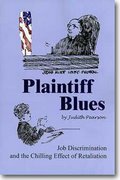
Tracking this crisis is the first step. Set graduation standards and require AYP. However, it's not as simple as one would think. As I explained in Plaintiff Blues, education data and statistics are not equal, district to district, state to state. As one example, if there are 100 students in a senior class and 96 graduate, that's a 96% graduation rate, right? What if that same senior class had 120 students back in 9th grade? Where did those other 24 students go?
There has to be an established reporting protocol and mandated reporting of graduation and dropout rates before we'll get a handle on the magnitude of this crisis - and find out who is really being left behind!
The dropout rate is much higher in some states, localities, and ethnic groups than others. Where is that you ask? Poor is the operative term. Poor in material resources, poor in environmental resources, poor in health care, poor in SES (Socio-economic Status), poor in spirit. All the NCLB emphasis on high-stakes, test score accountability totally ignores this dropout crisis. The best analogy compares NCLB to the mile race. Test them rigorously every tenth of a mile - but pay no attention to who crosses the finish line.
Worse yet, NCLB is a major contributor to the dropout crisis. Poor performing students are hardly encouraged to stay in school under the high-stakes, consequence-laden NCLB testing regime - particularly when there are no NCLB graduation standards! Schools would rather lose those students than have their school fail to make AYP (Annual Yearly Progress). As for those students themselves, which students are going to come back year after year to be tested one more time and be told, one more time, they failed?
Tracking this crisis is the first step. Set graduation standards and require AYP. However, it's not as simple as one would think. As I explained in Plaintiff Blues, education data and statistics are not equal, district to district, state to state. As one example, if there are 100 students in a senior class and 96 graduate, that's a 96% graduation rate, right? What if that same senior class had 120 students back in 9th grade? Where did those other 24 students go?
There has to be an established reporting protocol and mandated reporting of graduation and dropout rates before we'll get a handle on the magnitude of this crisis - and find out who is really being left behind!
Wednesday, March 19, 2008
It's the Money, Stupid!
"Money is the root of all evil" is a concept that's been around forever. It's probably more accurate to quote the Bible, "For the love of money is the root of all evil." I Timothy 6:10. Just because it's an ancient concept does not mean that it has no currency today. It's not the money itself but what men do to get it that's at the root of it all.
Aside from the recent bailout of Bear Sternes, coupled with the decades-old S & L bailout we're still paying for, estimates are that we are stuck in $2-3 trillion dollar war in Iraq and Afghanistan. In the good old economic analogy, "guns or butter," imagine the common good those trillions could have accomplished: social security fixed, medicare funded, energy independence implemented, inner city schools fixed, mortgages saved, etc.
But bailouts and wars are good for the economy - and vastly better for a few than for the many. Those same few take their billions and spend it to further insure and protect their interests. They lobby to block solutions to major problems and contribute obscene sums of money to political campaigns to make certain new policies and programs never interfere with their profits.
If you consider any of the major problems facing us, it is not difficult to figure one which of the few, big money interests will be working against any reasonable solution. If it's health care solutions, the drug companies, insurance companies and medical supply companies will be doubling timing to protect the status quo that is working so well for them. Energy independence, carbon emissions, global warming - count on the oil and power industries to spend billions and more to protect their present investments, including those in Middle Eastern oil.
Perhaps the worst and most comprehensive evil generated by the love of money is the selling of our democracy. Today only a billionaire can run for national office without the money from the few big money interests - whether corporate or PAC. And how naive to suppose that there's no quid pro quo with those huge contributions. The buying and selling of congresssmen is a relatively unregulated, open market. Until we get the money out of the political process, we should expect little in the way of real solutions to serious problems. It's the money, stupid!
Aside from the recent bailout of Bear Sternes, coupled with the decades-old S & L bailout we're still paying for, estimates are that we are stuck in $2-3 trillion dollar war in Iraq and Afghanistan. In the good old economic analogy, "guns or butter," imagine the common good those trillions could have accomplished: social security fixed, medicare funded, energy independence implemented, inner city schools fixed, mortgages saved, etc.
But bailouts and wars are good for the economy - and vastly better for a few than for the many. Those same few take their billions and spend it to further insure and protect their interests. They lobby to block solutions to major problems and contribute obscene sums of money to political campaigns to make certain new policies and programs never interfere with their profits.
If you consider any of the major problems facing us, it is not difficult to figure one which of the few, big money interests will be working against any reasonable solution. If it's health care solutions, the drug companies, insurance companies and medical supply companies will be doubling timing to protect the status quo that is working so well for them. Energy independence, carbon emissions, global warming - count on the oil and power industries to spend billions and more to protect their present investments, including those in Middle Eastern oil.
Perhaps the worst and most comprehensive evil generated by the love of money is the selling of our democracy. Today only a billionaire can run for national office without the money from the few big money interests - whether corporate or PAC. And how naive to suppose that there's no quid pro quo with those huge contributions. The buying and selling of congresssmen is a relatively unregulated, open market. Until we get the money out of the political process, we should expect little in the way of real solutions to serious problems. It's the money, stupid!
Monday, March 17, 2008
Bush + Deregulation=Bailout for Big Guys
We must have forgotten the massive Savings $ Loan Bailout of 1989. Reagan and Bush 41 were the presidents who presided over the deregulation of those S & L's and the largest corporate bailout in our history - $32 billion for 30 years! By 2020, that will approach $1 trillion! That money keeps coming from taxpayers and goes to the people who bought those 30 year bonds. And the rich get richer!
FYI, another son of Bush 41, Neil Bush, was involved in that crisis, as director of the Silverado Savings and Loan. That one alone cast taxpayers $1.6 Million. The cause of the S & L crisis? Deregulation that opened the door to wild and speculative real estate investments.
However, the costs of that bailout were more far-reaching than even those staggering figures suggest. The real costs were felt yesterday, when the Federal Reserve Board bailed-out Bear Sterns for $30 million. Bear Sterns was one of the biggest cowboy investment banks plundering the sub-prime mortgage business - our current crisis. The S & L bailout of 1989 sent a clear message to the cowboys out there. It's green light for greedy, high-risk, speculative real estate investments. If you get in trouble, the government (that's us, the taxpayer) will bail you out. Don't worry, no one in this Bush administration is minding the store and there will be no heavy handed regulation - or any at all for that matter!
Meanwhile, once again, the John and Jane Doe's are losing their homes all across the country. Will we ever see a bailout for the average taxpayer?
FYI, another son of Bush 41, Neil Bush, was involved in that crisis, as director of the Silverado Savings and Loan. That one alone cast taxpayers $1.6 Million. The cause of the S & L crisis? Deregulation that opened the door to wild and speculative real estate investments.
However, the costs of that bailout were more far-reaching than even those staggering figures suggest. The real costs were felt yesterday, when the Federal Reserve Board bailed-out Bear Sterns for $30 million. Bear Sterns was one of the biggest cowboy investment banks plundering the sub-prime mortgage business - our current crisis. The S & L bailout of 1989 sent a clear message to the cowboys out there. It's green light for greedy, high-risk, speculative real estate investments. If you get in trouble, the government (that's us, the taxpayer) will bail you out. Don't worry, no one in this Bush administration is minding the store and there will be no heavy handed regulation - or any at all for that matter!
Meanwhile, once again, the John and Jane Doe's are losing their homes all across the country. Will we ever see a bailout for the average taxpayer?
Tuesday, February 26, 2008
Who Is Don Siegelman?
Don Siegelman is the former governor of Alabama. So what does that mean to me and the rest of the world? Siegelman is currently in jail and it is all of our interests to understand how and why that happened. On Sunday, February 24, the CBS program 60 Minutes told his story. He was selectively prosecuted for political reasons by the Bush Justice Department - with back channel coaching from none other than Karl Rove.
Over 50 former U. S. Attorneys (both Republicans and Democrats) have gotten involved in trying to undo this injustice. If this kind of abuse and misuse of the Justice Department is allowed to stand, the country and the rule of law are in serious trouble. I have written two previous posts about the aggregation and consolidation of power in this administration. The first, on May 24, is about Bush's politicization of the justice system. The second, on February 9, documents Bush's signing statements as his administration builds his Imperial Presidency.
Over 50 former U. S. Attorneys (both Republicans and Democrats) have gotten involved in trying to undo this injustice. If this kind of abuse and misuse of the Justice Department is allowed to stand, the country and the rule of law are in serious trouble. I have written two previous posts about the aggregation and consolidation of power in this administration. The first, on May 24, is about Bush's politicization of the justice system. The second, on February 9, documents Bush's signing statements as his administration builds his Imperial Presidency.
Subscribe to:
Posts (Atom)